Achin Batra, Grow's new SVP of Engineering, on his career and the makings of a great engineering culture
Learn about Achin Batra, Grow Therapy’s new SVP of engineering, and his career journey from engineering at Goldman Sachs to cross-industry tech leader.
Thoughts
·
4 min

If there’s one thing that Achin Batra loves, it’s saying “yes” to a good challenge, no matter how big. Every challenge is an opportunity to grow: When he took on his first management role as an engineer, he learned to lead; when his role expanded from one team to leading two and then three, he scaled his new skills; and when he’s been presented with opportunities to work across industries, whether B2B or DTC, he’s adapted and learned to build things that haven’t been built before.
What makes Achin so confident in taking on the next challenge? Looking back, he sees a throughline: “The core theme of all this is that I could lean in and be very business oriented and trust the people who said I have the skills, or I could say no. And then I just kept saying yes, and opportunities started to arise,” he said.
That same drive brought him to Grow Therapy, where he joined in May as our SVP of Engineering. We sat down with him to learn more about his journey, his leadership philosophy, and what he's building here.
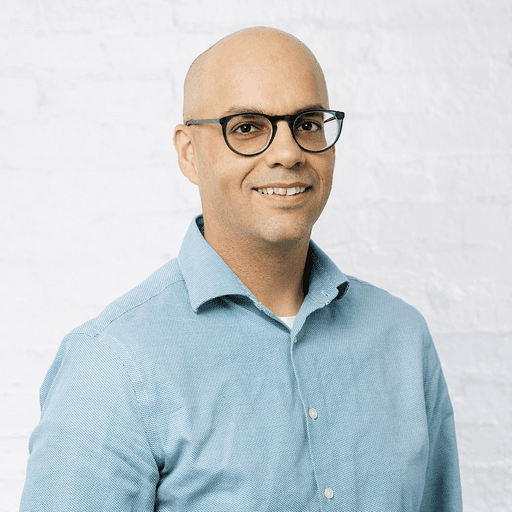
From engineer to engineering leader
Achin started his career as an engineer at large companies in highly regulated spaces: Siemens Medical and later, Goldman Sachs. He joined Goldman Sachs in 2007 – just before the financial crisis – and “the eyeballs from both the company and the government were on us,” he said. There, he developed the work ethic that would carry him through the rest of his career, but eventually found himself “missing technology.”
As a result, Achin joined Bazaarvoice, an ecommerce startup building a small engineering team in the New York area. There, he learned how to move fast and ship, ship, ship. “We were really just building new things and trying to figure out how to move fast and deliver software, which is where I learned what software engineering actually looks like,” he said.
If engineering at Goldman Sachs was all firefighting, Bazaarvoice was all about building and iterating. There, he got the opportunity to work on a close-knit team, which forged friendships that have lasted to this day.
As the company shifted its position before going public, he moved to Flatiron Health, where he spent 9 years working his way up from staff software engineer to director of engineering to vice president of engineering experience. “They were the most formative years of my career,” he said, but for much of the time, leadership wasn’t on his radar.
“Hey, I'm a technical dude, and I will always be a technical dude,” he recalls thinking at the time. He first worked on the oncology EMR team and then the clinical research team, where he focused on building pipelines for recruiting oncology patients. But when a leader asked him to head the team, he overcame his doubts, rose to the challenge, and flourished. “Many of the opportunities came because of the leaders who put trust in me,” he said. And each time, he proved himself again and again. When another leader left the company, Achin filled the space and expanded the number of teams he managed.
“I moved after I felt that I had completed what I wanted to achieve there. They're still doing great work, as I see it,” he said. In 2024, he joined Thirty Madison, where he found another great environment: “Amazing people, amazing engineering, and amazing leadership,” he said. There, he eventually became CTO, got his first taste of working in a DTC environment, and learned to think like a business leader rather than just a tech leader with additional responsibilities.
From his time at Siemens to now, healthcare technology has kept bringing him back. “What fascinates me is the scale and complexity of the technology challenges in healthcare. There’s still so much to build and improve, which is why I keep coming back,” he said.
After two decades across healthcare and tech, he was ready for a challenge that brings both together.
Why Grow? Why now?
Joining Grow is a significant moment in Achin’s career, but his life changed months earlier, too, when he and his wife had their first baby. Now, he has a new perspective on life, work, and the balance between them.
When the opportunity to join Grow arose, he saw a unique opportunity in the people, mission, and product. “The mission resonated. The people resonated. The work resonated. And I felt like I was uniquely positioned to make some interesting changes here,” he said.
Grow, too, is at a pivotal moment in its journey. We raised $150 million in March of this year, and over two million people have now turned to Grow for mental healthcare. Getting to the next level of growth will require us to solve core product problems—like marketplace dynamics across insurance plans and regions, care delivery and provider experience, and the tricky work of patient matching—at a greater scale.
And there are new opportunities: AI gives us the chance to evolve our engineering practices, but there are nuances. For example, the 10x engineer that seemingly everyone is looking for now? Achin considers it a distraction: “I hate the word 2x, 5x, 10x. That's just not the way. I think instead about how we can leverage our existing tooling to move faster.”
Companies can embrace AI and still move in the wrong direction, Achin argues. “There are companies that are very AI forward in the product, but are still behind in the software development lifecycle (SDLC). My focus is on making sure that we are AI forward in our SDLC in the next six months,” he said.
Meanwhile, Achin is wary not to lose sight of what matters most: building a product that provides a great experience for our users. “Sometimes people conflate speed and quality, but you have to go with speed and quality. It was easier to say that and not meet those expectations in the past, but I think you can do it with the current tooling.”
The key, he said, is that, if code generation is a solved problem, the constraints shift, not disappear. “How do you do code reviews? Engineering still owns code quality. What about testing? Incident management? Observability? It’s all going to change at scale,” he said.
What Achin is building
Achin is excited about the technical solutions, but more than anything, his mind is on the engineering culture. “That's the one thing that has stuck with me throughout my career. To really care about the engineering culture, you have to treat it like a long-term product, make space for it, and actually invest in it,” he said.
This requires him to spend a lot of time listening, which is exactly what he has prioritized in his first few months. “For at least a few months, that is my job: purely listen. I have to understand how to build trust with the organization first, and then, if I do that, changing the organization can be much easier because people trust me.”
Focusing on the engineering culture serves a dual purpose: it enables current engineers at Grow to thrive, and it’s also the best way to attract new engineering talent. “This is a long game. If we're doing the right thing and making sure every single engineer has pride in adding to the engineering culture, then the brand is visible externally.”
That’s why one of his first efforts is to build the engineering culture committee. Their current priorities include:
Onboarding: Communicate the nature of Grow’s work, and support engineers when they join and as they learn more.
Hackathons: Encouraging experimentation that's focused on real business problems.
Recognition: Celebrate the work our team is doing, and make time to recognize each other.
Achin is careful to structure this work as bottom-up change rather than top-down mandates. “My teams are my bosses – that’s how I think about it,” he said. “If you meet them where they’re at, you can actually make the change required, and a good engineering culture can bring up the energy in the organization.”
Why you should work at Grow, too
At Grow, we’re building a company that centers empathy and teams who really care about the people facing issues we and our loved ones all face. We set a high bar for performance because we set a high bar for care. Achin sees three values, in particular, indicating an ideal Grow prospect:
Speed: Can you move quickly? “The analogy is the ship going in one direction,” Achin explained. Can you commit to one direction and shift directions when the winds change?
Thoughtfulness: Do you make technical decisions with care? Do you think about quality? About the long-term effects of architectural choices?
Accountability: Do you deeply care about the users, the product, and the mission?
“The one constant I’ve always seen in successful engineers is deeply caring about the product,” Achin said. “You actually put yourself in the client's or provider’s shoes and see how they're experiencing your tools.”
If this sounds like the kind of work that excites you, see our open engineering roles.


